Turning “Now” into Sound with “Cosmic Love”
Reading Keiji Haino’s Award Speech Poem Through Ancient Japanese Sensibility and Intuitive Improvisation
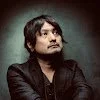
At the 70th Venice Biennale Musica 2026, Keiji Haino-san received the Golden Lion for Lifetime Achievement.
Officially introduced as a “noise poet,” he has set down a monumental milestone. To me, it feels like a sign that Japan’s underground scene is entering a historic turning point.
The poem he recited during his acceptance speech reads, to me, as the words of a performer’s soul: it tries to find great love inside a “now” that comes only once, and to hand its rapture and lament over to us through sound. It also resonates strongly with the concept behind a video work I lensed and edited myself in 2010. Read in light of the Shinto way of seeing the world, the old Japanese feel for language, and the sensibility of improvisation, where you play with no predetermined form and rely only on intuition in the moment, its outline becomes much clearer.
A note: this is purely my own interpretation. Haino-san himself strongly dislikes the words “improvisation” and “god” (as he says in an interview in the video). I use them here anyway, without substitutes.
1. What Arrives in the “Gaps,” Kami no manimani, and the Trap of Words
運命の呼吸の合間に、忍び込むのだ。
“I Love”というケバケバしい罠を仕掛けに。Slipping into the gap between the breaths of fate.
To set a gaudy trap called “I Love.”
In Japan, since ancient times, important things have been thought to dwell in ma (間), the gap or interval. The divine was not always present. It visited in a crack, at a boundary. Something drifts in from across the sea on the waves, or arrives as a wind, or as a presence you can sense. “Slipping into the gap between the breaths of fate” is exactly this sense of otozure (訪れ), “visitation.” It’s also said that otozure originally meant that oto (音, “sound”) brings something along with it, so the link between sound and visitation is suggestive.
The word also contains zure, “deviation,” so the poem seems to play on sound that deviates too. You can read it as saying that sound which slips away from form and discipline holds a value of its own.
This sensibility has been sung again and again in waka poetry through the phrase “kami no manimani” (神のまにまに). Manimani is a classical Japanese word meaning “as it may be” or “leaving it to.” You offer what is there in front of you, flowers, autumn leaves, words of prayer, and entrust where it goes to the will of the gods. The attitude of letting go of your own scheming is packed into that single word.
This phrase and the poem overlap in a few ways:
You offer what is there, now. You don’t present something carefully polished. You offer what is at hand. This matches Haino-san (the “poet,” from here on) dedicating a single instrument and the sound he makes right here, right now.
Praying (active) and entrusting (passive) melt together. You reach out, yet leave the result outside your hands. It connects to the way the poem’s second stanza begins, “Passive and active are...,” and then stops.
What is dedicated is eventually lost. Dedicating and letting go become one act, which reads like a preview of the sacrifice and fulfillment of “now” that the poem describes later.
Kami no manimani is also very close to what happens just before the first note of an improvisation. You sit in front of the instrument without deciding what to play. Rather than a sound assembled in the head, you wait for the atmosphere of the room, or a presence rising quietly from inside you. “The gap between the breaths of fate” can be read as the moment when, in a silence where nothing has yet sounded, the first note arrives. Sound is not something you make so much as something that comes.
But what slips in there is “I Love,” that “gaudy trap.” If kami no manimani is the attitude of letting go of meaning and entrusting yourself, “I Love” is a flashy, easy-to-grasp label that pins the moment down to your own meaning. The same thing happens in improvisation. The moment a calculation creeps in, “If I play it like this, it’ll sound moving,” or “This is where I should build it up,” the sound stops being alive and merely traces a prepared pattern. In the old Japanese idea of kotodama (言霊), words carry spirit, and the moment you say something, you shape reality. Perhaps it’s because he knows the power of words that he calls casual naming a “trap.”
Still, I don’t think this is a rejection of love itself. It’s discomfort with a small love fixed in place by words, and behind it seems to lie the aspiration that “there must be a larger, deeper love.” The whole poem begins as a journey toward that greater love.
私と今、どっちがどっちに滲んでいる?
Between me and the present, which one is bleeding into the other?
When you give yourself over to kami no manimani, the boundary between “I” and the flow blurs. Where does your own prayer end, and where does the work of the divine begin? The same thing happens mid-improvisation. There are moments when you can’t tell whether you are making the sound or the sound is moving you. Do I live the present, or does the present let me live? This question springs from a very old sensibility, one that never places the self outside the world.
2. I Want to Swap Subject and Predicate
主語と述語を、位置を変えたい。
そのことによって、上下関係を見直すことができるのではないでしょうか?I want to swap the positions of subject and predicate.
Wouldn’t that let us reconsider hierarchy?
What is spoken here isn’t a confirmation of something that has already happened. It’s a wish: I want to change it. From “I live the present” to “the present lets me live.” If you swap the positions of subject and predicate, perhaps the relationship of master and servant, above and below, can be reconsidered. The question “Wouldn’t that be possible?” carries not certainty but a modest hope that it might be so.
If you apply this “subject and predicate” to “I Love” in the first stanza, the content of the wish becomes more concrete. In “I Love,” “I” is the subject and “Love” is the predicate. The “I” holds the initiative and stands on the side that does the loving. Love fixed in this form is the “gaudy trap” the poet speaks of, because “I love” treats love as my possession or my act, a stance of trying to be the master of love.
So what happens if we swap the positions? We get “Love I,” something like “love I-s.” Love takes the subject’s place, and I am placed inside its working. From “I love” to “love comes through me.” It’s the same inversion as “I live the present” becoming “the present lets me live.”
This inversion changes the quality of love. As long as the subject is “I,” love stays a small, personal emotion. But when love becomes the subject, I become its passageway, or its vessel. Here, I think, is the entrance to the “cosmic love” the poet is heading toward. Discomfort with small love gives rise to the wish to “change positions,” and beyond that wish a love larger than the self opens up.
There is also a paradox here. Wanting to change positions is itself an active act of will. Yet what that desire points toward is letting go of staying in the seat of the “master,” and moving to the side of being allowed to live, being loved. The scheming of wanting to let go of scheming. You could say he is trying, by his own will, to quietly choose the stance of kami no manimani.
Improvisation lives between these two. “Playing” is active, “listening and responding” is passive, and the two happen almost simultaneously. You seem to be deciding the sound, but the note that just rang is calling the next. Even the performer can’t say which one is the subject.
That’s probably why, after stating his wish, the poet begins, “Passive and active are...,” stops mid-sentence, and continues with “Time is always flowing.” There’s no need to swap positions. Distinguishing active from passive doesn’t mean much inside the flow. Rather than ranking one above the other, you simply exist in the flow. What came into view beyond the wish was not the completion of a swap, but the sense of that distinction coming undone.
3. A Hundred-Millionth of “Now,” and Nakaima
“今”の前の時間と、“今”の後の時間、
人が感じているのは1億分の1くらいですよね?The time before “now,” and the time after “now,”
what people feel is about a hundred-millionth of it, isn’t it?
What we can actually sense as “now” is only a tiny fragment of the vast time that spreads before and after. “A hundred-millionth” is probably not a precise figure but an expression of how small that feeling is. Behind the visible world lies a far greater, invisible expanse, and compared with it, the “now” that people grasp is a very small window.
This brings to mind a classical Japanese word: “nakaima” (中今).
Nakaima means this very moment, standing exactly midway between past and future. It appears in the imperial proclamations (senmyō) in the Shoku Nihongi, and it was understood not as mere “present time” but as a precious moment in which what has been inherited from the past and what continues into the future meet at a single point.
“Now” is not isolated: it is sandwiched between the moment before and the moment after, connected to both.
Living now with everything you have means living the whole: a single moment carries the entire flow of time.
The small “now” becomes the center of the great flow: though tiny as a dot, it is the place where all time intersects.
In improvisation, this sense becomes a concrete experience. The note that just rang was born from the note before it, and at the same time it gives direction to the next note, which hasn’t sounded yet. Unlike a composed piece, where you can see how it will unfold, the performer has no choice but to entrust everything to the single note sounding now.
What people can sense may be a minute point, one hundred-millionth or so. But that point is sandwiched between the infinite expanses before and after, and is also the center of time that receives them. This feeling also becomes a doorway to the “deepest now” mentioned later. If all of time, before and after, is folded inside the small “now,” then descending to its bottom is how you touch the “deepest now.”
4. The “Now” That Is Sacrificed for the Next Moment
そして必ず、“今の時間”は、“次の時間”の餌食になっています。
それは、“今の時間”も、“前の時間”を餌食にしてきたことと対等でしょう。And without fail, “the present moment” becomes prey to “the next moment.”
That is only equal to how “the present moment” has itself preyed on “the moment before.”
“Now” is always sacrificed so that the next moment can begin. However full the moment, it is swept away by the next before you can savor it completely or fulfill what you wished. In that sense, “now” ends without ever fully accomplishing its purpose.
In improvisation, this nature is laid bare. A sound, once made, can’t be taken back. Even if you realize a better note existed, the sound is already out in the air. And the next note has no choice but to take on the one that has already rung. Each note is dedicated to the next, and passes away.
But the poet doesn’t see this as simple misfortune, because this “now” itself stands on the sacrifice of the “moment before.” It is both the one sacrificed and the one that has sacrificed. This view of “equality” connects to the ancient sensibility of musuhi (むすひ, 産霊).
Musuhi is a classical Japanese word for the force that brings all things into being, nurtures them, and ties them together. Musu (生す) means to be born and to grow, and hi is said to express a spiritual power. It also resonates with the word musubi (結び), “a knot” or “a binding,” and here lies the idea that where one thing ends, a knot forms where the next is born. Seen this way, “now” yielding to the next moment is not a loss. It becomes a knot that ties the moment before to the moment after. The moment before gives birth to now, and now gives birth to the next moment. No moment is merely someone’s sacrifice. Each is an equal knot within a chain.
An improvised sound is the same kind of knot. The note that has finished ringing disappears, but its resonance becomes the seed that calls forth the next. By vanishing, sound gives birth to the next sound.
This sensibility has long lived in everyday Japanese life, too. Take the Shikinen Sengū, where shrine buildings are rebuilt every twenty years. By losing the old, it makes the shrine perpetually new and lasting. An ending is not a loss but a duty for continuing. Likewise, just as the seasons change and falling flowers nourish the next life, scattering itself has been understood as beauty, as part of the cycle.
それならば、お互いに前と後ろを受け入れ続けるのがいいのではないでしょうか?
Then wouldn’t it be better to keep accepting, with each other, what comes before and what comes after?
So the conclusion, don’t resist, keep accepting both the moment before and the moment after, is an affirmation of “giving yourself to the flow.” In improvisation, it shows up as an attitude of not rejecting the previous note as a mistake, but accepting it as it is and moving on. Even an unexpected sound is taken on as the truth of that moment and tied to the next note. It is not resignation, but a quiet acceptance of living as part of the knot and the cycle.
As evidence, in this video he also talks about his live approach: how well he can turn an unpredictable mistake or sound into his own sound, his own music, when one occurs.
5. Infinity Within “One,” and the “Deepest Now”
この“次”に移ることを意識しながら感じている“今”。
“一”、全体の欠片の“一”が、どれくらい無限を感じさせることを意識し、
それを音に出すという行為に変換し、“今”と“一番深い今”を人々に感じてもらいたいと思います。While being conscious of moving on to this “next,” I feel this “now.”
How much infinity can this “one,” this fragment of the whole, make us feel?
I want to be conscious of that, convert it into the act of producing sound, and let people feel “now” and the “deepest now.”
The idea of letting infinity be felt inside “one,” a fragment of the whole, overlaps with the sense that the whole dwells in a single part. This stance of seeing the whole within the individual can also be read as an orientation toward something beyond the individual, toward what I’d call cosmic love.
I also find it striking that he separates “now” from the “deepest now.” One is the “now” that merely passes. The other is a deep now, lying beneath the sense of nakaima, continuous with eternity.
This “deepest now” calls to mind a world that has long been called “tokoyo” (常世). Tokoyo was believed to lie beyond the sea, a world where time does not move and continues forever. The gods and abundant harvests were said to come from there, riding the waves. But the poet doesn’t place this eternity far away. He places it inside this very moment: after fully accepting both before and after, the distant eternity appears, folded into the present. Read this way, the “deepest now” is tokoyo rising up inside the present.
This feeling also echoes words from a far-off land. In Greece, time was thought to have two faces: chronos, the time that ticks on without rest like a clock, and kairos, a time with a quality, one that opens only at a certain moment. If the “now” that simply passes is chronos, the “deepest now” is closer to kairos. It can’t be counted, it opens only at that moment, and once it passes, it never returns. Yet in it, a single instant carries the weight of eternity.
Kairos is also said to have originally meant the gap between the warp threads of a loom, or the narrow opening an arrow must pass through. This overlaps strangely with the poem’s “gap between the breaths of fate” and its word “weave out.” Only in the gaps of flowing time does the deep now come to visit.
6. Practice with a Single Instrument
ですので僕は時には、たった1つの楽器を、
“アクセントを変える”“響きの長さを変える”“強さを変える”ということで示し続けています。So at times, I keep presenting just one instrument
by changing the accent, changing the length of the resonance, changing the intensity.
Here the abstract talk of time lands in concrete playing. Rather than adding instruments to make things grand, he changes only one instrument’s accent, length of resonance, and intensity.
And I don’t think this is a predetermined development, or improvisation that follows a form. It’s about which way intuition turns, here and now. Will the next note be stronger, held longer, or shifted in accent? That decision isn’t made by prior design but by ear and body, intuitively, note by note.
Traditional Japanese music has long cherished this aesthetic. Everything is said to lie in the attack and decay of a single note, and in the spaces between notes. Music includes the sounding of a note, the process of its resonance fading, and even the silence that follows. It’s an aesthetics of subtraction, saying a lot with few sounds.
Also, if you cut a note short and sharp, the outline of “now” becomes clear, but the clarity of the tone gets blurred. If you let it resonate long, the tone becomes clear, but the width of “now” widens. I think the poet moves back and forth between these two, searching for infinity within a single note.
In Japan’s traditional music, kagura, gagaku, and the sound of bells and drums, sound invited the gods, purified the space, and connected people to the divine. Sound is a path linking the invisible world and the present. The poet seems to be trying, through music, to take on that role.
7. The “One” That Is Fulfilled in Tears
そこで編みだすことができるのか?
そしたら全てを、一度しか現れない“一”=“今”は成就するでしょう、泣きながら。Can we weave that out?
If so, then everything, the “one” = “now” that appears only once, will be fulfilled, weeping.
The question “Can we weave that out?” is humility toward a search whose answer can’t be seen. With no blueprint, no one can know whether it’s possible until the sound is actually made. If it is, the “now” that will never come again is fulfilled. But “weeping.”
I think these tears carry two meanings at once:
Tears of rapture: being moved at having lived a once-only now completely.
Tears of lament: the ache that at the moment of fulfillment, it too is sacrificed for the next moment and passes away.
These tears are like the first cry of a newborn who, leaving the pure, fully satisfied world of amniotic fluid, touches air for the first time.
Leaving a world where nothing was lacking and coming into this one, a person cries out loudly. Rapture at meeting a new world, and lament for a world that can never be returned to. The two can’t be separated; they ring out as one voice. The fulfillment of being born happens at the same instant as parting, and that single cry will never be repeated.
Sounds played by pure intuition are the same. They can be recorded, but not reproduced.
You can’t even trace them.
Even if the same person tries with the same instrument, the same note never comes again. That’s why the sound exists only in the moment it rings.
The “weeping” in the poem must be this very voice.
Letting go of what was filled and being born into the next. In that trembling mix of rapture and lament lies the “cosmic love” the poet tried to turn into sound. Not a small love fixed by words, but a great love that accepts both before and after, and embraces even loss. With each note, “now” is born, and passes.
Wrapping Up
This poem is like a performer’s manifesto, tying together time, the relationship between self and world, and music.
The divine visits in the gaps, words carry power, and people and the world dissolve into each other. Time cycles, and by ending, continues anew. A large whole dwells in one small thing, and sound connects that invisible world with the present. Placed within these ancient sensibilities, the poem’s “now” stands up not as a mere instant but as a precious, once-only moment connected to eternity (nakaima).
And the way to live that “now” is intuitive improvisation, with no predetermined form. That is where the poem’s resolve lies. Not presenting prepared answers, but waiting for the sound that comes, receiving it, and letting it go. In that repetition, a single instrument resounds with infinity.
What runs through the whole is a feeling, born on the road toward cosmic love, in which rapture and lament are mixed. Beginning from discomfort with a small love fixed by words, he tries to see great love in a once-only now, and, knowing that this “now” will pass, keeps accepting both before and after. The poet doesn’t discard lament. He entrusts it, lament and all, to a single sound and hands it to us.
That sound is something like a newborn’s first cry. Carrying together the lament of leaving a fulfilled world and the rapture of meeting a new one, it echoes through this world as a once-only “now.”
It is music that cannot be contained, not only within jazz or improvisation, but within any existing category of genre. It can only be called a genre of its own: Keiji Haino.
A final note: from the poem alone, there is no way to know whether the author wrote with Shinto, old ways of thought, improvisation, or “cosmic love” in mind. What I have written here is only the overlaps that appear when the poem is read in light of ancient Japanese sensibility and intuitive improvisation.